How Course Watering Schedules Shape Performance Patterns in UK Flat Handicaps
Jakob Schmid · Sep 9, 2026
How Course Watering Schedules Shape Performance Patterns in UK Flat Handicaps
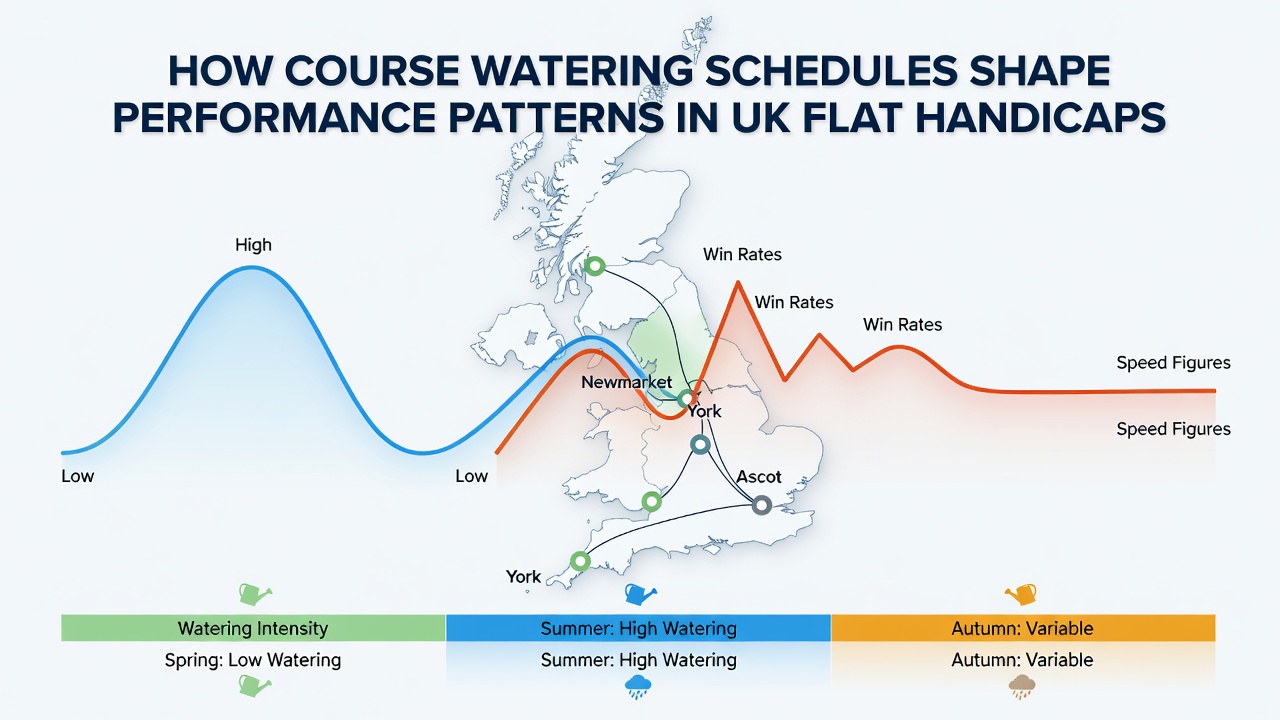
Course watering schedules at UK flat tracks determine ground conditions that directly influence how horses perform in handicap races where weights adjust for past results. Researchers tracking turf moisture levels across venues like Newmarket and York note that precise irrigation timing alters firmness ratings and creates measurable shifts in finishing times during the summer and autumn meetings.
Core Elements of Watering Practices
Grounds teams monitor rainfall forecasts and apply water in measured amounts to maintain consistent going descriptions from good to firm through soft, and this process affects stride patterns for different horse types in handicap fields. Data from multiple seasons shows that tracks with automated irrigation systems achieve more uniform surfaces compared with those relying on manual methods, while the timing of applications often occurs overnight to allow absorption before morning declarations.
Observers note that September 2026 meetings at several southern tracks will incorporate updated moisture sensors to refine these schedules further, allowing officials to respond to extended dry spells that have become more frequent in recent years. Such adjustments help maintain the balance between safety and performance consistency that handicappers rely upon when assessing form lines.
Ground Conditions and Handicap Outcomes
Flat handicaps reward horses suited to specific ground states, and watering decisions can amplify or diminish advantages for front-runners versus hold-up types. Studies compiled by equine research groups indicate that softer surfaces produced by heavier watering tend to favor stamina-laden runners in longer distances, whereas firmer conditions reward speedier profiles in sprints where quick acceleration matters most. These patterns emerge clearly when analysts compare results across consecutive days at the same venue.
What's interesting is how draw bias interacts with watered ground, since inside stalls can become slower when extra moisture settles in lower-lying areas. Handicappers reviewing past data often adjust their assessments accordingly, and trainers who monitor course reports adjust training routines to prepare horses for the expected surface. Evidence from official going reports reveals that even small variations in water application produce statistically significant differences in sectional times during the closing stages of races.

Regional Variations Across UK Tracks
Northern circuits such as Doncaster and Haydock operate under different climate influences than southern venues, leading to distinct watering strategies that shape local performance trends in handicap contests. Northern tracks often require less supplemental water due to higher rainfall, yet when dry periods occur the resulting firmer ground can produce faster overall times compared with southern equivalents. Southern tracks meanwhile face greater pressure to irrigate during peak summer periods to prevent the ground from becoming too hard for safe racing.
According to reports from the Australian Turf Management Research Centre, comparative data from similar climates demonstrates that consistent watering protocols reduce variance in race outcomes by up to 15 percent. UK tracks adopting elements of these approaches have recorded steadier performance patterns in their handicap divisions, particularly in races run over distances between seven furlongs and a mile and a half.
Data Patterns and Seasonal Trends
Long-term records kept by racing authorities show that performance clusters form around specific watering regimes, with certain trainers excelling when ground conditions match their stable's preferred profile. In handicap races this creates opportunities for sharp observers to identify runners whose previous efforts align with the anticipated surface. September meetings frequently highlight these trends because late-season fields include horses returning from breaks whose fitness levels interact with the ground state.
Researchers have observed that excessive watering late in the day can lead to a temporary slowing effect that dissipates by race time, whereas morning applications produce more stable readings. Trainers and jockeys who study these details gain edges in predicting how the surface will play, and betting markets reflect this knowledge through adjusted odds for horses with proven records on similar going.
Conclusion
Watering schedules at UK flat tracks serve as a controllable variable that shapes the conditions under which handicap races unfold, and the resulting performance patterns provide measurable insights for those analyzing form. Continued refinement of irrigation techniques alongside improved monitoring tools promises greater consistency across meetings, allowing the sport to balance safety requirements with the competitive demands of handicap racing throughout the season.