Rail Movements: Mapping Changes to Draw Bias Across Major Flat Racing Fixtures
Vera Schröder · Sep 23, 2026
Rail Movements: Mapping Changes to Draw Bias Across Major Flat Racing Fixtures
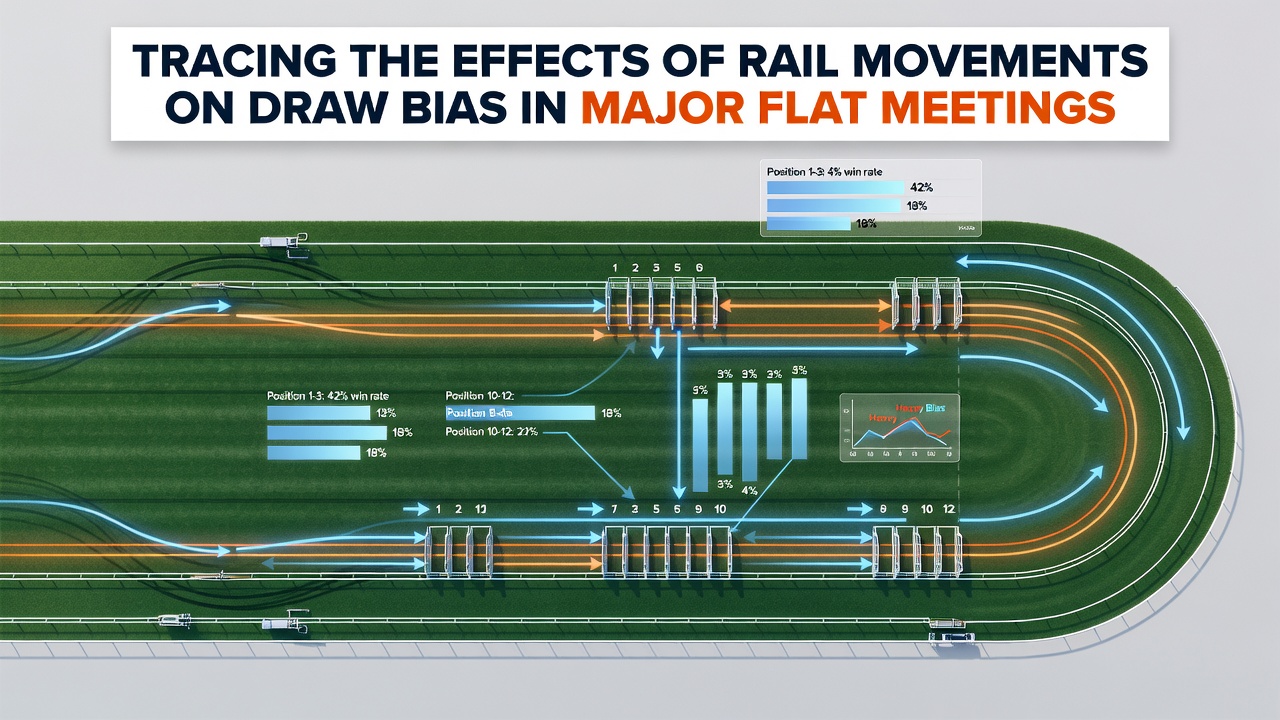
Track officials adjust rails at flat meetings to manage ground conditions and protect the racing surface throughout a fixture, and these shifts often reshape the advantages tied to starting stall positions. Data from multiple British racecourses shows that moving the rail even a few metres alters the racing line, camber, and effective distances runners must cover. Researchers tracking performance patterns note that low draws lose their edge at certain venues once the rail moves outward, while high-drawn horses gain ground on the new path.
Mechanics Behind Rail Adjustments and Position Bias
Rail movements occur for several operational reasons including ground preservation after heavy rain, safety repairs, and fixture scheduling demands, and each change modifies how the track plays for different stall numbers. When crews shift the rail inward on the home straight, the racing line tightens for inside draws, shortening the run for those horses while increasing the distance low-drawn runners travel around any bend. Observers tracking major meetings record that outward moves produce the opposite effect, pushing the field wider and favouring horses that can handle the extra ground from higher draws.
Studies compiled over recent seasons indicate that camber changes accompany many rail adjustments, creating a banking effect that influences how horses maintain balance through turns. At venues with pronounced cambers, an outward rail move can reduce the benefit of an inside draw by forcing runners to race on a flatter section of the track. Those who analyse sectional data find that pace biases shift accordingly, with front-runners from certain stalls either helped or hindered depending on the new configuration.
Patterns Observed at Prominent Flat Meetings
Major fixtures such as Royal Ascot, Glorious Goodwood, and the Ebor meeting at York provide clear examples of how rail decisions affect draw statistics, and analysts compare results before and after documented moves. At Ascot teh straight course often sees rail adjustments between days of the meeting, and records show that winners from stalls one to four drop in frequency once the rail moves out by several metres. Similar trends appear at Newmarket where the July and Rowley Mile courses undergo regular repositioning to manage wear, leading to measurable swings in the performance of high-drawn horses on the altered ground.
One study released by the British Horseracing Authority examined ten years of results across six leading tracks and found that rail moves of four metres or more correlated with a reversal in draw advantage at four of those venues. The report noted that courses with tight bends experienced the most pronounced shifts because the extra distance travelled by inside-drawn horses became significant once the rail changed position. Those examining the figures highlight that the effect compounds when rail moves coincide with changes in going description, producing layered biases that handicappers must account for when assessing form.
Data Trends and Comparative Analysis
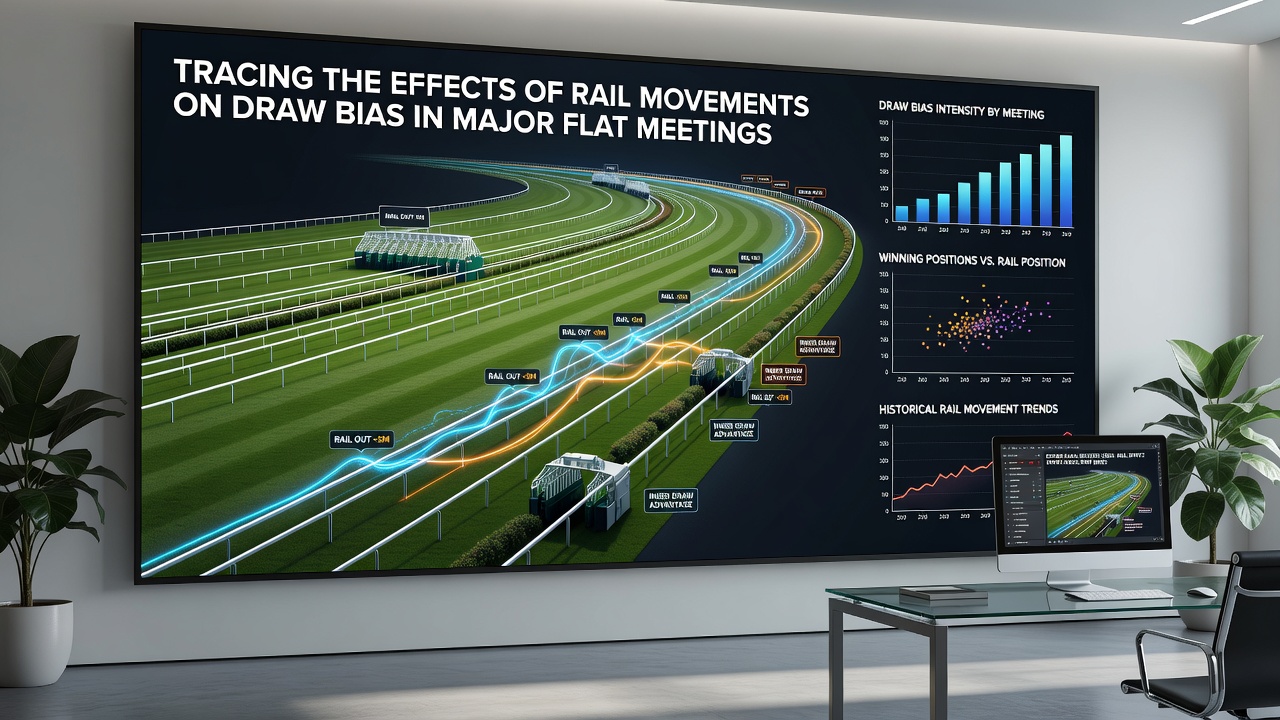
Performance databases maintained by racing authorities reveal consistent patterns when rail positions are logged alongside stall numbers and finishing positions, and these datasets allow direct comparison across seasons. At York the Ebor meeting typically features multiple rail adjustments over five days, and the resulting statistics show that draw bias can flip between the first and final days at the same distance. Researchers cross-referencing these records with ground conditions note that soft ground amplifies the impact of rail moves because the new racing line often presents fresher turf.
Comparative work from international bodies adds context, with reports from Racing Australia indicating that similar rail management practices at Flemington produce parallel shifts in draw statistics during major carnival meetings. Figures released by the Jockey Club in the United States demonstrate that rail moves at tracks like Saratoga alter inside speed figures in a manner consistent with observations from European venues. Observers note that the underlying principle remains constant regardless of jurisdiction, as the physical relationship between rail position, camber, and starting stall creates measurable advantages or disadvantages.
Implications for September 2026 Fixtures
Scheduled rail management plans for September 2026 at several major tracks include provisions for dynamic adjustments based on real-time ground monitoring, and these plans are expected to generate fresh datasets for bias analysis. Organisers at Doncaster and Haydock have published preliminary schedules indicating that rail positions will be logged daily during their autumn meetings, allowing immediate comparison with historical draw statistics. Those reviewing the protocols expect the enhanced record-keeping to clarify how quickly draw advantages reassert themselves after each move.
Academic researchers affiliated with equine performance programmes have signalled interest in collecting data from these 2026 fixtures to model predictive outcomes, and preliminary frameworks suggest that machine-learning approaches could identify bias reversals within hours of a rail adjustment. Such modelling would build on existing sectional timing records and provide track officials with clearer guidance on when a move is likely to produce unintended draw effects.
Conclusion
Rail movements continue to serve as a primary tool for managing track surfaces at flat meetings while simultaneously reshaping draw bias in measurable ways, and the accumulation of detailed records supports ongoing analysis across multiple jurisdictions. Data from British meetings combined with comparative findings from Australian and American sources shows that even modest rail shifts alter the racing line, distance, and camber enough to change which stalls hold statistical advantages. As September 2026 approaches, enhanced monitoring at key fixtures will supply additional evidence that refines current understanding of these interactions.